How to Measure Furniture for Moving: A Complete Guide
Moving furniture without proper measurements is like solving a puzzle blindfolded. At Master Movers, we’ve seen countless moving days turn stressful when homeowners realize their beloved sectional won’t fit through the doorway. Learning how to measure furniture for moving is essential, whether you’re relocating within Nashville or moving across Tennessee.
This guide walks you through the measuring techniques we use as professional movers to ensure every piece of furniture makes it safely from your old home to your new one. These furniture measuring tips will help you plan a smooth relocation.
Essential Tools You Need to Measure Furniture for Moving
Measuring furniture correctly starts with having the right tools on hand. We recommend gathering everything before you begin so you're not running around mid-measurement looking for supplies.
Basic Measuring Equipment
The foundation of accurate furniture measuring relies on a few essential tools that every homeowner should have:
- 25-foot retractable measuring tape: This length handles most furniture and doorway measurements without needing to stop and restart
- Pencil and notepad: Document every measurement immediately to avoid confusion later
- Masking tape: Mark starting and ending points on curved or awkwardly shaped furniture
- Helper or assistant: Large furniture pieces require two people for accurate measurements
- Step stool or ladder: Reach the top of tall armoires, hutches, and bookcases safely
Digital Measuring Apps and Technology
Modern technology offers convenient alternatives to traditional measuring tapes. Several smartphone apps now use augmented reality to measure furniture and spaces with impressive accuracy. Apps like Measure (iPhone) and Google Measure (Android) let you point your phone camera at furniture to capture dimensions instantly. These digital tools work well for quick estimates, but we still recommend confirming critical measurements with a physical tape measure.
Laser measuring devices provide another option for tech-savvy movers. These handheld tools shoot a laser beam that calculates distance when it hits a surface. Laser measures excel at capturing room dimensions and long hallway measurements where traditional tape measures become cumbersome. The investment pays off if you're measuring multiple rooms or planning future renovations alongside your move.
How to Measure Furniture for Moving Through Doorways and Hallways
Doorways and hallways create the biggest challenges when moving furniture through Nashville homes. These passageways determine whether your furniture moves smoothly or requires creative maneuvering. Knowing how to measure furniture for moving through tight spaces saves time and prevents damage.
Measuring Door Frames Correctly
Start by measuring the actual door opening, not the door frame itself. Place your tape measure inside the frame where the door closes to get the true width. Most Nashville homes built before 1980 have doorways around 30 inches wide, while newer construction typically offers 32 to 36 inches. Measure the height from the floor to the top of the opening, accounting for any threshold or weather stripping that reduces clearance.
Don't forget to check which direction the door swings. A door that opens into a room gives you the full width of the opening, while a door that swings into a hallway may block part of the passage. We often recommend removing doors from their hinges temporarily to gain those extra few inches of clearance. This simple step takes two minutes but can make the difference between fitting furniture through or getting stuck halfway.
Hallway Width and Corner Angles
Hallways present their own set of measurement challenges beyond simple width. Measure the narrowest point of the hallway, which often occurs where walls meet or where light fixtures protrude. Many Nashville homes feature decorative molding or chair rails that reduce the effective width by several inches.
Pay special attention to corners where hallways turn. Furniture needs clearance on both sides when pivoting around a corner. We measure the distance from the corner to any obstacles like thermostats, light switches, or artwork that might interfere. A good rule of thumb is that furniture width should not exceed 75% of the hallway width for comfortable maneuvering around corners.
Stairway Measurements
Staircases require the most detailed measurements of any passage in your home. Start by measuring the width between the handrails or walls at the narrowest point. Nashville homes with original staircases from the early 1900s sometimes have widths as narrow as 28 inches.
Next, measure the vertical clearance from each step to the ceiling or any overhanging structure. High ceilings in areas like Germantown provide generous clearance, but finished basements often have low-hanging ductwork or floor joists.
Measure the depth of each landing where the stairs turn. Furniture needs enough landing space to rest while you adjust your grip and change angles. Finally, loosening a handrail bracket creates just enough extra space to fit an oversized headboard through.
Step-by-Step Guide to Measure Different Furniture Types
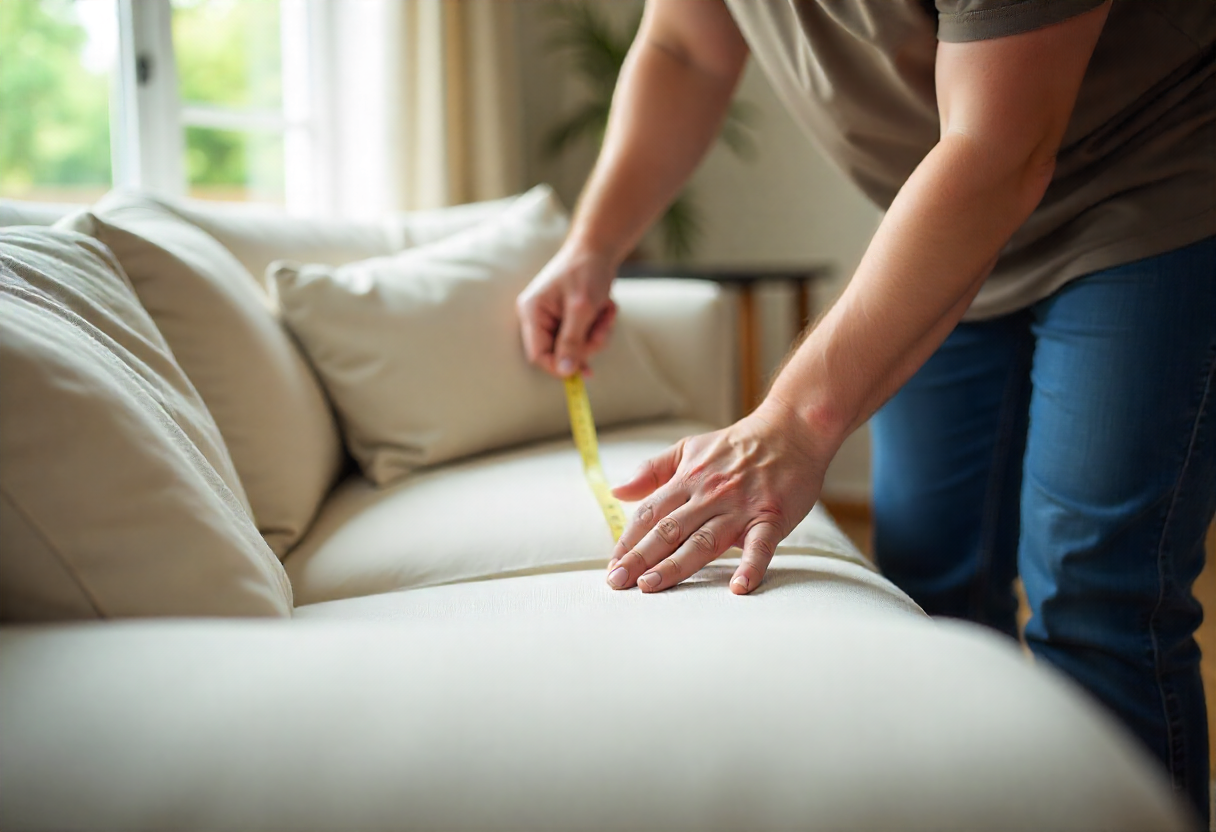
Understanding the universal measuring method eliminates guesswork and ensures you capture every critical dimension. We follow this same process whether we're moving a small nightstand or a large sectional sofa. These furniture measuring tips apply to all furniture types.
Every piece of furniture requires three basic measurements that form the foundation of your moving plan. Follow these steps to capture accurate dimensions every time.
Step 1: Measure the Height
- Place your measuring tape on the floor directly beneath the furniture
- Extend the tape straight up to the absolute highest point
- Include decorative elements, finials, or hardware that extends upward
- Keep the tape level and perpendicular to the floor
- Record the measurement in inches
Step 2: Measure the Width
- Stand directly in front of the furniture piece
- Find the widest point from left to right
- Place the tape at one end and extend it straight across
- Include armrests, handles, or any protruding side elements
- Write down the measurement immediately
Step 3: Measure the Depth
- Pull the furniture slightly away from the wall for access
- Measure from the front-most point to the back-most point
- Keep the tape straight and level from front to back
- Account for any back panels or supports that extend outward
- Record this dimension with your other measurements
Step 4: Calculate the Diagonal
- Measure from the bottom front corner to the top back corner
- This measurement is critical for tall, deep furniture like refrigerators and armoires
- The diagonal determines whether furniture fits through doorways when tilted
- You can use the formula: square root of (height squared plus depth squared)
- Physically measuring with tape ensures accuracy and accounts for irregular shapes
Step 5: Double-Check Your Measurements
- Verify each dimension by measuring a second time
- Have a helper confirm your readings for accuracy
- Document all measurements in your inventory list
- Take photos with the tape measure visible in the frame
The diagonal measurement deserves special attention because it often determines whether furniture fits through doorways. Furniture often tilts at an angle when moving through doorways, and the diagonal dimension determines clearance in this position. When furniture exceeds doorway width, the diagonal measurement reveals whether angling the piece creates enough clearance to pass through.
Don't Forget Protruding Parts
Legs, handles, knobs, and decorative elements add inches to furniture dimensions that many people overlook. We always measure furniture with all parts attached in their normal position. Understanding furniture dimensions moving through your home requires accounting for every protruding element.
- Check drawer pulls and handles: These often extend 2 to 4 inches beyond the drawer or cabinet face
- Measure furniture legs: Sofa and chair legs frequently extend several inches beyond the base cushion
- Account for decorative elements: Crown molding, finials, and ornamental carvings add unexpected height and width
- Note table pedestal spread: Table bases often spread wider at the floor than at the tabletop
- Document removable parts: Furniture legs, cushions, and drawers that unscrew or detach can reduce dimensions significantly
- Test drawer extensions: Pull drawers fully open to measure how far they protrude from the cabinet
These small adjustments frequently make the difference between furniture that fits and furniture that requires professional disassembly. Removing legs can reduce overall height by 4 to 8 inches, while taking out drawers lightens the load and decreases depth.
Special Considerations for Different Furniture
Each furniture type has unique characteristics that require additional measurements beyond the universal method. Taking time to measure the couch for doorway clearance or checking the bed frame dimensions prevents moving day complications.
Sofas and Sectionals:
- Measure seat height from the floor to the top of the seat cushion
- Record arm height from the floor to the top of the armrest for navigating low windows or doorways
- Measure each sectional component separately and note how pieces connect
- Calculate the diagonal depth for doorway clearance
- When you measure a couch for doorway fit, remember to account for legs and arms
Beds and Bed Frames:
- Measure headboard, footboard, and frame separately, as heights often differ significantly
- Record mattress thickness if moving the bed assembled
- Check frame construction (slats, box spring, or platform) to determine disassembly options
- Note whether the headboard detaches easily from the frame
Tables and Dining Sets:
- Measure leg spread at the base, not just tabletop dimensions
- Record the distance between legs at floor level to determine doorway fit
- Measure aprons or support structures between legs that reduce clearance
- Check whether the table legs are removable with basic tools
- Measure the table with and without leaves installed
- Document how leaves are stored (in a table or separately)
Dressers and Cabinets:
- Include mirror height in total measurements (mirrors add 12 to 24 inches)
- Measure drawer protrusions when fully extended
- Note crown molding, decorative toe kicks, and architectural details
- Check for attached backing boards behind dressers that might catch on door frames
- Account for any hardware or knobs that extend beyond the cabinet face
Common Furniture Measuring Mistakes to Avoid
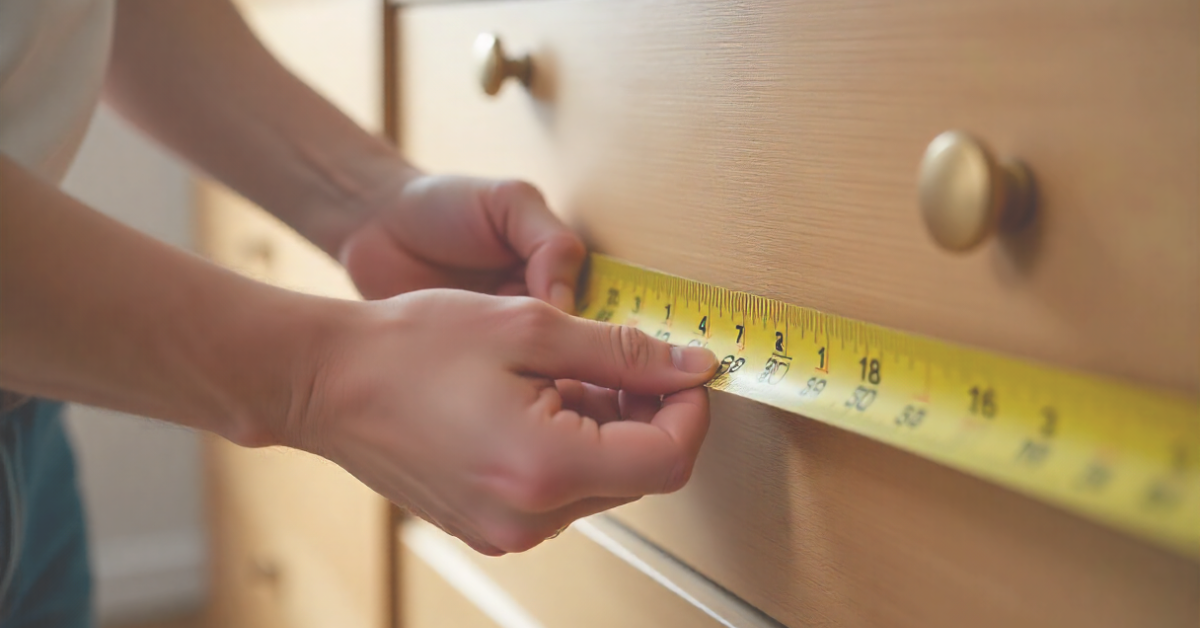
Even experienced movers occasionally make measuring errors that complicate moving day. We've identified the most frequent mistakes homeowners make when preparing for a move. Avoiding these errors ensures accurate furniture dimensions moving day goes smoothly.
- Measuring the door frame instead of the opening: The frame is decorative and adds no usable width—always measure the clear space between frame edges
- Forgetting diagonal dimensions: A 40-inch-wide bookcase might have a 50-inch diagonal that exceeds doorway width
- Ignoring carpet and floor transitions: Thick carpet pads reduce door height by half an inch, and transition strips protrude above floor level
- Assuming all doors are standard size: Nashville homes range from historic properties to modern builds, with varying door dimensions
- Not measuring both entry and exit points: Furniture must fit through the current narrow doors before it can enter the wider doorways at the new home
- Overlooking protruding hardware: Door handles, light fixtures, and thermostats reduce the effective hallway and doorway width
- Measuring only once: Double-check critical measurements to catch errors before moving day
Your new home might have wider doorways than your current residence, but furniture still needs to exit through your current narrow doors first. We create a complete pathway map that shows every dimension from the furniture's current location through both homes to its final destination. These furniture measuring tips help you avoid the most common pitfalls.
How to Document Your Measurements for Movers
Accurate documentation transforms raw measurements into actionable moving plans. We rely on detailed furniture inventories to prepare equipment, assign crew members, and schedule adequate time for your move. Proper documentation ensures you measure furniture before movers arrive with all the information they need.
Creating a Furniture Inventory List
Start your inventory by listing every piece of furniture moving to your new home. Proper documentation ensures nothing gets overlooked and helps movers prepare appropriately.
- List each furniture piece: Include room location, furniture type, and all three dimensions (height, width, depth)
- Add diagonal measurements: Record diagonal dimensions for any furniture taller than 36 inches
- Note special characteristics: Include details like "legs removable," "mirror attached," or "requires disassembly."
- Take photos from multiple angles: Capture each piece with a tape measure visible in the frame for scale reference
- Document current condition: Photos provide evidence of furniture condition before the move
- Use digital storage: Create spreadsheets in Excel or Google Sheets with columns for dimensions, weight estimates, and special handling needs
- Include destination rooms: Note where each piece will go in your new home to streamline unloading
This format allows you to sort by size, calculate total weight, and print reference sheets for moving day. Store your inventory where you can easily share it with your moving company. When you measure furniture before movers arrive, they can plan the most efficient loading strategy.
Communicating with Your Moving Company
Share your furniture measurements and inventory with your moving company well before moving day. This information helps us assess whether we need special equipment like furniture dollies, moving straps, or stair rollers.
- Share measurements in advance: Provide dimensions at least one week before moving day to allow proper planning
- Highlight potential challenges: Point out tight corners, narrow staircases, or doorways that require door removal
- Identify disassembly needs: Note which furniture pieces might require taking apart before moving
- Ask specific questions: Request advice about protective covering, special positioning, or handling techniques for valuable pieces
- Discuss equipment needs: Confirm whether the moving company will bring furniture pads, dollies, and tools for disassembly
- Request a walkthrough: Schedule an in-home consultation for complex moves involving oversized furniture
The Nashville Area Chamber of Commerce offers additional relocation resources for families and businesses moving to Middle Tennessee. The Metropolitan Government of Nashville and Davidson County provides helpful information about moving permits and parking regulations for moving trucks in different neighborhoods.
When you mention that your armoire requires navigating a tight corner at the top of the stairs, we bring extra padding and blankets to protect your investment. Whether you're moving to vibrant neighborhoods like The Gulch or historic areas like Germantown, understanding furniture dimensions and moving requirements helps Master Movers plan your relocation effectively.
Conclusion
Measuring furniture before moving eliminates guesswork and prevents the frustration of pieces that won't fit through doorways. The time spent learning how to measure furniture for moving pays off with a smoother moving experience and protected belongings. Remember to measure height, width, depth, and diagonal dimensions for every large furniture piece. Document measurements with photos and detailed notes that you can share with professional movers.
At Master Movers, we've helped thousands of Nashville families relocate successfully by taking the stress out of furniture logistics. Our experienced team knows how to measure furniture for moving through everything from historic townhomes to modern condos. Use a complete step-by-step moving resource to ensure all aspects of your move are covered. The Nashville Public Library also offers free community resources for residents planning local moves.
Contact Master Movers today for a free moving consultation where we'll discuss your furniture, assess your spaces, and create a customized moving plan that ensures your belongings arrive safely at your new Nashville home.